

Your Next AC System Is Only as Good as Its Sizing. Dallas–Fort Worth, We Measure It Right.
Most HVAC contractors in DFW size your system with a quick visual walk-through and a number pulled from experience. That guess costs you comfort, efficiency, and money — sometimes for years. A system that’s too large short-cycles and leaves your home humid. One that’s too small runs constantly and still can’t keep up when it hits 105°F in August.
Expedition Heating & Air uses professional precision scanning equipment to measure your home room by room, then runs a full ACCA Manual J load calculation to determine exactly what size system your home actually needs. You get a written report, a technician walkthrough, and — if you move forward with us — the full $399 scan fee credited toward your installation.
Precision HVAC Sizing for Dallas–Fort Worth Homes
In the DFW climate — where summers regularly hit 105°F and humidity makes oversized systems feel worse than no AC at all — getting the sizing right isn’t optional. It’s the difference between a system that works and one that runs your bill up while leaving you uncomfortable. Here’s why it matters more than any other decision you’ll make about your HVAC system.
Why HVAC Sizing Matters More Than Brand, Price, or SEER Rating
Contractors and homeowners spend a lot of energy comparing equipment brands and efficiency ratings. That’s not the wrong thing to do — but it’s the second thing to do. The first thing is making sure the system is the right size for your home. A 20 SEER unit installed at the wrong tonnage will underperform a 14 SEER unit sized correctly.
In North Texas, oversizing is the more common mistake. The summer heat is aggressive, so the instinct is to “go bigger.” But an oversized system reaches thermostat setpoint quickly, shuts off, and then cycles right back on — never running long enough to pull moisture out of the air. You get a home that feels cold but clammy, with hot and cold spots throughout. An undersized system has the opposite problem: it runs constantly, drives up your electric bill, wears out faster, and still can’t hold temperature on the worst days of the year.
The industry standard solution to both problems is a Manual J load calculation — a room-by-room heat gain and heat loss analysis that accounts for your home’s square footage, ceiling heights, insulation levels, window sizes and orientation, duct layout, and local climate data. The problem is that most contractors in this market don’t do one. They use a rule of thumb (typically 400–500 square feet per ton), fill in a software template with estimates, or just match what was there before. None of that is accurate.
Garbage in, garbage out. We fix the garbage-in part with precision measurement.
What Is a Precision HVAC Sizing Scan?
Our technicians use professional precision scanning equipment to capture the exact dimensions of every room in your home — ceiling heights, floor area, wall lengths, and the size and location of every window and exterior door. Here’s what happens during your appointment:
- Pre-Scan Consultation: The technician walks through your home with you, identifies any comfort complaints or known problem areas, and notes the location of your existing equipment, duct registers, and thermostat.
- Room-by-Room Precision Measurement: Each room is scanned to capture precise ceiling heights, floor area, wall lengths, and the size and location of every window and exterior door. No tape measures, no estimates.
- Building Envelope Assessment: The technician documents insulation type and estimated R-value (attic, walls, floor), infiltration characteristics, and any obvious envelope deficiencies.
- Window and Orientation Data Entry: Window glazing type, solar exposure by orientation (north/south/east/west), and shading conditions are recorded for each room.
- Manual J/S/D Calculation: Scan data is input into ACCA-compliant load calculation software. The software outputs the exact BTU heating and cooling load for each room and for the whole house, then produces equipment sizing recommendations per Manual S.
- Report Delivery and Technician Review: You receive a written sizing report. The technician walks you through the findings, answers your questions, and explains what the numbers mean for equipment selection.
The entire appointment typically takes 1.5 to 2.5 hours depending on home size and number of systems.
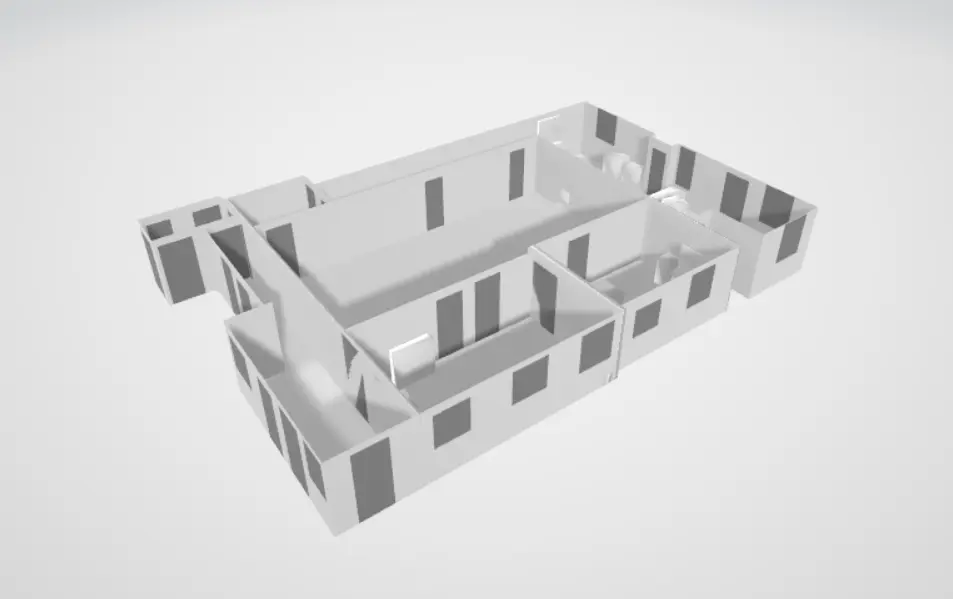
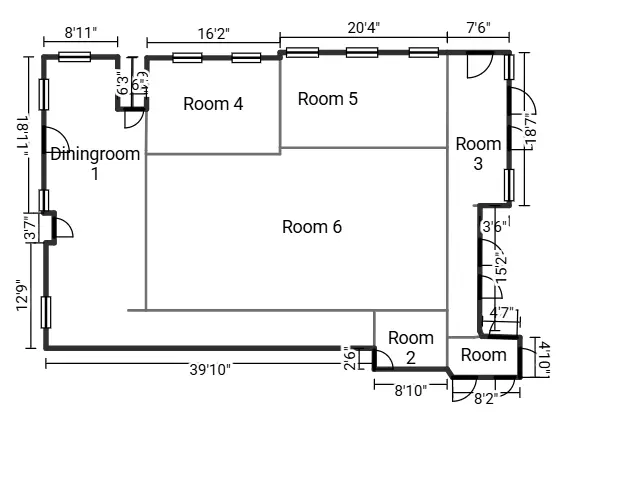
Actual 3D model output from a precision home measurement scan — every room, ceiling height, window and door location captured precisely.
What You Receive
| Deliverable | Details |
|---|---|
| Written Manual J Load Calculation Report | Full room-by-room BTU load analysis, total system load, and summary |
| Manual S Equipment Sizing Recommendation | Recommended system tonnage and capacity range based on actual load data |
| Precision Measurement Summary | Documented square footage, ceiling heights, and envelope data for each room |
| Technician Consultation | In-person review of findings and answers to your questions |
| Digital Report Copy | PDF sent to your email for your records or sharing with other contractors |
| Installation Credit (if applicable) | Full $399 scan fee credited toward any Expedition HVAC installation |
Who Should Book a Precision Sizing Scan
You’re Replacing an Aging System
Your current system is 12–18 years old and it’s time to replace it. Before you spend $7,000–$12,000 on new equipment, spend $399 to confirm what size you actually need. Your existing system may have been sized wrong from day one — and simply replacing it with the same tonnage locks in the same problems.
You’ve Gotten Conflicting Quotes
Contractor A is recommending a 4-ton unit. Contractor B says 3 tons. Both gave you “free estimates.” The scan tells you who’s right — and why. A written Manual J gives you an objective data point to compare quotes against, regardless of which contractor you ultimately hire.
You’re Buying a New Home
The inspection period is the right time to understand whether the existing HVAC system is the right size for the home. An undersized system in a DFW summer is a quality-of-life problem from the day you move in. Know before you close.
Your New System Still Isn’t Cooling Right
You had a new system installed in the last 1–3 years and it still has hot spots, humidity issues, or can’t keep up in peak heat. Before you let anyone tell you “that’s just how it is in Texas,” find out whether the problem is the equipment size, the duct system, or something else. The scan gives you the data to know for certain.
You Own Investment or Rental Properties
Oversized systems in rental units fail faster due to short-cycling and drive up tenant utility complaints. Knowing the correct load for each property helps you spec replacements accurately without overpaying for equipment or dealing with repeat callbacks.
Precision HVAC Sizing Scan Pricing
| Number of Systems | Price | Notes |
|---|---|---|
| 1 System | $399 | Covers single-zone residential systems |
| 2 Systems | $598 | +$199 per additional system |
| 3 Systems | $797 | |
| 4 Systems | $996 | Maximum per appointment |
Installation credit: The full $399 scan fee is credited toward your installation if you choose Expedition Heating & Air for the work. The scan pays for itself.
See also: HVAC Pricing in Garland | HVAC Financing Options
Frequently Asked Questions
No. The scan is available to any DFW homeowner, regardless of who installs your system. You own the report. Share it with any contractor you want. If you do choose Expedition HVAC for your installation, the $399 fee is credited toward that project — but there’s no obligation to buy from us.
Bring it. Once you have your Manual J report, you can compare it against every quote you’ve received. If a contractor is recommending equipment that doesn’t match the load calculation, that’s information you need before you sign anything. The report gives you an objective benchmark that no sales pitch can override.
A free estimate tells you what a contractor wants to sell you. A Manual J load calculation tells you what your home actually needs. Most free estimates in this market are based on rules of thumb or quick visual assessments — not measured data. Our scan takes 1.5 to 2.5 hours and produces a documented, ACCA-compliant report. Those are fundamentally different things.
Yes. Texas requires Manual J load calculations for new HVAC installations under the International Energy Conservation Code (IECC) as adopted by the state. Our report is produced using ACCA Manual J/S/D compliant software and satisfies this requirement. License: TACLB112648E.
Most single-system homes take 1.5 to 2 hours. Larger homes or multi-system properties may take up to 2.5 hours. We’ll give you a time estimate when you book based on your home’s size and number of systems.
It will tell you the correct tonnage and capacity range your home needs, per Manual S. It won’t specify a brand — that’s a separate conversation that depends on your budget, efficiency goals, and available incentives. We’re happy to walk through equipment options with you after the scan. See our AC installation services or get a replacement quote.
Yes. A comfort complaint after a recent installation is one of the most common reasons people book this scan. If your new system has hot spots, humidity problems, or can’t maintain setpoint on hot days, the cause is often an oversized system (short-cycling) or a duct system that doesn’t match the equipment. The Manual J gives you the data to diagnose the actual problem and hold your original contractor accountable if the sizing was wrong.
We serve Garland, Mesquite, Rowlett, Rockwall, Richardson, Plano, McKinney, Frisco, Allen, Wylie, Sachse, Murphy, Forney, Heath, and surrounding DFW communities. If you’re not sure whether we come to your area, call us at 469-905-4822 and we’ll confirm.
Book Your Precision HVAC Sizing Scan
Fill out the form below and we’ll contact you within 1 business day to confirm your appointment time.
Ready to Know Exactly What Your Home Needs?
Stop guessing. Stop relying on a contractor’s walk-through estimate. Get the numbers. For $399 — credited back if you install with us — you’ll have an ACCA-compliant Manual J load calculation based on precise measurements of your actual home.
✓ Licensed & Insured TACLB112648E ✓ $0 Diag Fee With Repair ✓ Salary-Based Techs ✓ Veteran Discounts Available
Expedition Heating & Air | License TACLB112648E | Serving Garland, Mesquite, Rowlett, Rockwall, Richardson, Plano, McKinney, Frisco, Allen, Wylie, Sachse, Murphy, Forney, Heath, and all of DFW