

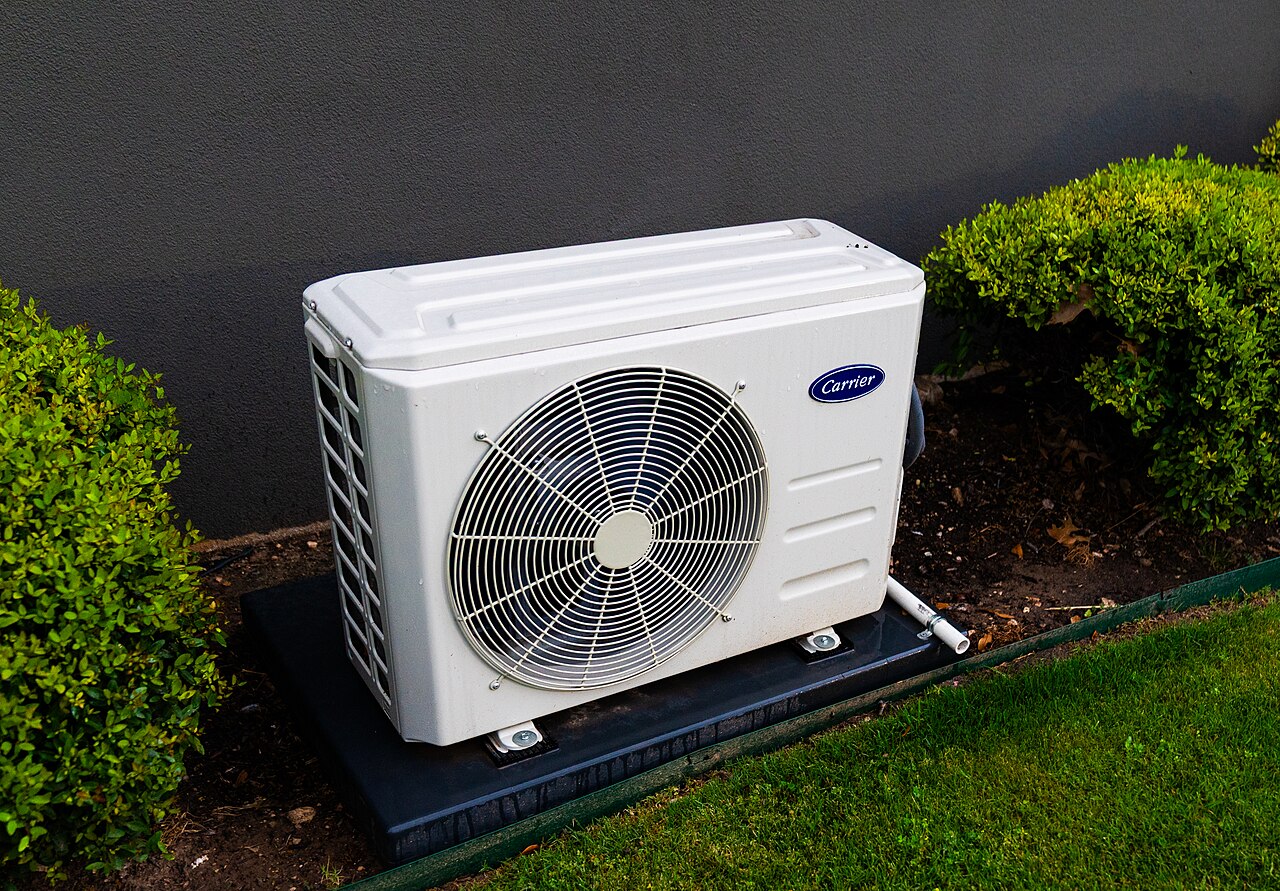
If you’ve ever wondered whether your aging AC has another summer left in it, you’re not alone. It’s one of the most common questions DFW homeowners ask — and the honest answer is that air conditioners in Texas don’t last as long as they do in cooler parts of the country.
Here’s what you need to know about AC lifespan in North Texas, what shortens it, and how to know when replacement is on the horizon.
The Short Answer: 12–17 Years With Good Maintenance
The national average lifespan for a central air conditioning system is often quoted as 15–20 years. In the Dallas-Fort Worth area, the realistic range is 12–17 years for a well-maintained system — and systems that skip regular maintenance often fail earlier than that.
Why the difference? It comes down to how hard your AC works in Texas.
Why Texas Is Hard on AC Systems
In most of the country, a central air conditioner runs for 3–4 months of the year. In DFW, your system is running meaningfully from May through October — roughly six months — with the hardest stretch from June through September when daily highs routinely exceed 95–105°F.
More runtime means more wear on every component: the compressor, the capacitors, the contactor, the blower motor, and the refrigerant system. A DFW air conditioner accumulates the equivalent of several “normal climate” years of wear every single Texas summer.
Add in high humidity in spring and fall, occasional hard freezes that stress the heating side, and the fact that many DFW homes have ductwork running through hot attics — and you have a recipe for accelerated system aging.
Factors That Affect How Long Your AC Lasts
Maintenance history is the biggest variable. Systems that receive annual tune-ups — coil cleaning, refrigerant level checks, electrical inspections, filter changes — consistently outlast neglected systems. Skipping maintenance is the fastest way to shorten your AC’s life. Learn more about our HVAC Maintenance Club.
System sizing matters too. An oversized system short-cycles (turns on and off rapidly), which causes excessive wear on the compressor. An undersized system runs constantly and never fully dehumidifies the home. Both scenarios shorten equipment life.
Installation quality plays a role. A system that was improperly charged with refrigerant at installation, or installed with mismatched components, will fail earlier than a properly installed system.
Brand and equipment tier also factor in. Entry-level equipment from any brand will typically have a shorter service life than mid-range or premium equipment, though proper maintenance can narrow that gap significantly.
Signs Your AC Is Reaching the End of Its Life
Even if your system hasn’t hit 15 years yet, these are signs it may be time to start planning for replacement:
- Frequent repairs — if you’ve had two or more significant repairs in the past two years, the system is likely in decline
- R-22 refrigerant — if your system uses R-22 (the old refrigerant, phased out in 2020), parts and refrigerant are increasingly expensive and hard to source
- Rising energy bills — aging systems lose efficiency, which shows up in your monthly Oncor bill
- Inconsistent cooling — rooms that were comfortable before now feel warm despite the system running
- System over 12 years old needing a major repair — at this point, replacement often makes more financial sense
The Repair vs. Replace Rule of Thumb
A common guideline is the “5,000 rule”: multiply the age of your system by the estimated repair cost. If the result exceeds $5,000, replacement is usually the better financial decision.
For example: a 14-year-old system needing a $400 repair = $5,600. That tips toward replacement. A 7-year-old system needing the same repair = $2,800. That tips toward repair.
This isn’t a hard rule, but it’s a useful starting framework. At Expedition HVAC, our salary-based technicians will always walk you through an honest repair vs. replace comparison — there’s no commission incentive to push you toward the more expensive option.
How to Extend the Life of Your AC
The single most effective thing you can do is schedule a tune-up every spring before cooling season begins. This gives a technician the chance to catch small problems — a capacitor showing signs of weakness, a dirty coil reducing efficiency, a refrigerant level that’s slightly low — before they become emergency failures in the middle of July.
Changing your air filter every 1–2 months during summer, keeping vegetation trimmed away from your outdoor unit, and not blocking return air vents with furniture also contribute meaningfully to system longevity.
Ready to Know Where Your System Stands?
If your AC is 10 years or older and you haven’t had it inspected recently, a maintenance visit is a smart investment before the next DFW summer arrives. Expedition HVAC serves homeowners across Garland, Richardson, Mesquite, Rowlett, Rockwall, Plano, Frisco, McKinney, Allen, and the greater DFW area. Call us at [PHONE PENDING] or schedule a tune-up online.
